

Closing the Teacher Shortage Gap with Smarter Compensation Decisions

How K-12 Districts Can Use Compensation Analytics to Address the Teacher Shortage Across the country, school districts are grappling with a challenge that has quietly grown into a full-scale crisis: the teacher shortage. What began as a post-pandemic hiring struggle has now become a structural issue touching nearly every state, subject area, and grade level. In the 2024–25 school year, the National Center for Education Statistics reported that 74% of public schools had difficulty filling one or more vacant teaching positions with fully certified teachers. And according to the Learning Policy Institute, more than 411,500 teaching positions nationwide were either unfilled or filled by teachers not fully certified in their assignments — roughly one in every eight teaching positions. For districts already under pressure from declining enrollment and constrained budgets, these vacancies carry a heavy cost — both financially and academically. Yet most districts still lack a clear, data-driven picture of how shortages are impacting their workforce strategy, their budgets, and ultimately their students. This is where analytics-driven compensation and labor-costing tools like TrueComp can change the conversation from reactive hiring to proactive workforce planning. Why Teacher Shortages Are More Than a Hiring Problem It’s tempting to view the teacher shortage as a pipeline issue — not enough new teachers entering the profession, too many leaving it early. But the reality is more complex. According to NCES data, the top reasons districts struggle to fill roles are lack of qualified candidates (64%) and too few applicants (62%). In high-need subject areas such as special education, bilingual education, and physical sciences, the problem is even more severe. In fact, nearly three-quarters of elementary schools report difficulty hiring certified special education teachers. Burnout compounds the challenge. Nearly 44% of K-12 teachers say they feel burned out often or always, according to Devlin Peck’s 2025 survey. Many cite unmanageable workloads, insufficient support staff, and stagnant compensation that fails to reflect modern classroom realities. These pressures have driven teachers to retire early, switch professions, or pursue remote and private-sector alternatives. Meanwhile, 48 states and the District of Columbia report having teachers in classrooms who are not fully certified — an estimated 365,967 educators nationwide. In California alone, more than 32,000 teachers currently teach without full qualifications. These gaps aren’t just HR headaches. They ripple across district budgets, student outcomes, and community trust. Unfilled positions lead to costly substitutes, higher overtime for existing staff, and lower student performance — all while stretching the remaining teachers thin. The Hidden Cost of Vacancies Every day a classroom sits without a qualified teacher, the costs mount — in overtime, substitute pay, lost instructional quality, and even state funding tied to attendance or performance metrics. Yet few districts can quantify the true financial impact. That’s a problem. When decision-makers can’t see the cost of vacancy, it becomes nearly impossible to prioritize investments or justify compensation adjustments where they matter most. For example: A district may spend hundreds of thousands per year on long-term substitutes but struggle to fund targeted incentives for hard-to-fill roles. Finance teams may approve pay raises across the board without visibility into which vacancies are driving the biggest cost spikes. HR may lack the data to make the case for differentials or sign-on bonuses that could actually reduce long-term costs. By connecting labor-costing analytics to compensation decisions, district leaders can break this cycle — identifying which positions are most costly to leave vacant, which are hardest to fill, and where data supports strategic pay adjustments. Why Step-and-Lane Pay Structures Need a Modern Lens Traditional step-and-lane compensation models — based on years of service and education level — were designed for stability and fairness. But in today’s competitive labor market, they can limit flexibility when districts need it most. When every teacher, regardless of subject demand or vacancy rate, moves up the same incremental pay ladder, HR and finance teams lose their ability to respond strategically to shortages. Districts often find themselves locked into costly annual raises that don’t address the specific areas of highest need — while struggling to attract teachers for specialized or high-demand roles. Modern compensation analytics platforms like TrueComp help districts layer data onto legacy pay structures, revealing where targeted pay adjustments can have the greatest impact. For instance: Modeling the cost of a 5% pay differential for special education teachers against the cost of recurring vacancies. Comparing total compensation (salary, benefits, stipends) against peer districts or regional benchmarks. Assessing how differentiated pay for hard-to-fill roles could reduce turnover and overall budget volatility. In other words, analytics allow districts to make pay competitive where it counts most — without blowing up the entire structure. From Data to Decisions: How Analytics Empower District Leaders While every district’s situation is unique, several consistent data points can inform smarter workforce strategies: Vacancy Cost per Role Track the real cost of unfilled positions — including substitute pay, lost instructional time, overtime for existing staff, and administrative burden. Example visual: Bar chart comparing “Average daily cost of vacancy by role” (e.g., Special Ed, Math, Elementary). Time-to-Fill and Retention Metrics Use HR data to identify which roles or departments take longest to fill or see highest turnover. Market Benchmarking Compare your district’s compensation (base pay + benefits + stipends) against similar districts using verified salary data. Example visual: Peer comparison table showing salary ranges for math teachers across 10 comparable districts. Scenario Modeling Run “what-if” scenarios to test the impact of pay changes, incentives, or retention bonuses on your budget and vacancy rates. Example visual: Flowchart showing how a 3% raise in a critical department lowers projected vacancy cost. Equity and Transparency Analysis Use benchmarking data to ensure internal equity and compliance with pay transparency laws — essential for building trust with staff and unions. When this data is brought together in one place — as TrueComp’s software enables — HR, Finance, and Operations can align decisions around a single source of truth. Real-World Example: Data That Drives Retention Consider a mid-sized district facing recurring shortages in special
TrueComp Expands Footprint with First North Carolina Partnership

Wayne County selects TrueComp’s real-time benchmarking to strengthen compensation decisions, improve workforce retention, and control labor costs WEST HOLLYWOOD, Calif. – TrueComp, the leading provider of compensation and workforce planning solutions for the public sector, today announced that Wayne County, North Carolina has selected TrueComp’s Benchmarking solution to modernize its approach to compensation decisions and workforce planning. This marks TrueComp’s first customer in North Carolina, expanding the company’s growing national footprint and reinforcing its commitment to helping governments hire competitively, retain top talent, and negotiate with confidence. TrueComp’s Benchmarking software enables public sector leaders real-time access to verified salary, benefits, and special pay data, without the time and cost of traditional, often months-long compensation studies. The platform helps agencies identify pay gaps, reduce turnover risk, and make equity-driven adjustments faster and more transparently. Wayne County joins a growing roster of cities and counties nationwide using TrueComp to improve workforce stability and manage their largest expense—labor costs—with greater precision and accountability. The move comes as many governments nationwide are rethinking how they approach compensation and workforce strategy. According to the Public Sector HR Association, only 22% of agencies feel “very confident” their compensation benchmarks are both accurate and competitive. “This partnership reflects the momentum we’re seeing across the southeast and nationwide as agencies seek modern, accessible ways to understand their workforce costs and competitiveness,” said Ryan James, Chief Revenue Officer at TrueComp. “Wayne County’s leadership is taking a forward-looking approach to compensation by showing that with the right data, you can strengthen both your workforce and your community’s confidence in how decisions are made.” The win follows a period of strong growth and regional expansion for TrueComp. Earlier this year, the company announced a double-digit increase in average deal size and new partnerships with major agencies across Florida, California, and the Northeast. The addition of Wayne County marks a key step in TrueComp’s southeast expansion and underscores growing demand for real-time workforce analytics as governments prepare for challenges such as the “silver tsunami” of retirements, tight labor markets, and increased turnover. About TrueComp TrueComp partners with over 1,000 public sector agencies to modernize workforce planning and control labor costs—their largest expense. Combining deep industry expertise with powerful compensation analytics, TrueComp helps HR and finance leaders hire competitively, retain top talent, and negotiate with confidence. Its intuitive platform delivers real-time, verified data and tailored insights that replace guesswork with clarity, helping agencies adapt to today’s workforce challenges—from the silver tsunami to increased turnover and tight budgets. TrueComp enables smarter, faster decisions that drive equity, fiscal sustainability, and long-term performance. Named a Top 100 Government Services company by the 2024 Inc. 5000. Learn more at www.truecomp.com. Recent Posts 5 Compensation Metrics Every Public Agency Should Track The Next Era of Labor Costing: Turning Workforce Data into Fiscal Strategy The Future of GovTech Is People-Centric: Why Workforce Analytics Matter More Than Ever Smarter Workforce Planning for School Districts Load More Tags Resource Library Articles Customer Toolkit Case Studies Events & Webinars Videos Newsroom Subscribe today! We want to hear your story! Is your agency making waves in public service with fresh, innovative solutions—especially when it comes to tackling tough compensation challenges? Share your journey with us for a chance to be featured in our upcoming agency spotlight series. Let’s shine a light on your achievements and inspire others together! Click here
5 Compensation Metrics Every Public Agency Should Track

Essential Compensation Metrics for Modern Public-Sector Leaders Labor costs account for nearly 60% of public-sector budgets, yet many agencies still rely on outdated spreadsheets or static reports to make multimillion-dollar decisions. In an era defined by talent shortages, pay transparency, and fiscal scrutiny, public agencies need a smarter way to measure and manage compensation. The right metrics don’t just reveal where you are—they shape how you plan for the future. Here are five key compensation metrics every HR and Finance leader should be tracking to strengthen pay competitiveness, equity, and long-term sustainability. Market Competitiveness Ratio (Compa-Ratio) What it measures: How an employee’s pay compares to the market midpoint for similar roles. A compa-ratio below 1.0 suggests an employee or position is paid below market, while a ratio above 1.0 may signal overpayment or potential compression issues. Tracking this ratio helps agencies identify pay gaps early and stay competitive with peer jurisdictions—critical in today’s tight labor market. Why it matters: Ensuring pay competitiveness is the foundation of recruitment and retention. Agencies that fall behind market averages risk losing talent to better-paying neighbors. How TrueComp helps: TrueComp’s Benchmarking platform calculates compa-ratios across job families, allowing leaders to instantly visualize pay alignment and make adjustments backed by current market data. Internal Equity Index What it measures: Pay fairness among employees performing similar roles within the same agency. Even well-intentioned pay structures can drift out of alignment over time—especially after years of step increases, promotions, and policy changes. The Internal Equity Index helps agencies assess whether compensation remains balanced and defensible. Why it matters: Internal misalignment undermines morale, increases grievance risks, and erodes trust in leadership. Tracking internal equity ensures that your compensation philosophy is consistent and transparent across departments. How TrueComp helps: Benchmarking tools within TrueComp visualize internal pay relationships, helping HR and Finance identify inequities and take corrective action before they escalate. Total Compensation Cost as a percentage of Operating Budget What it measures: The percentage of your total budget dedicated to wages, benefits, and overtime. For most public agencies, labor costs are the single largest line item. Tracking this metric reveals how salary adjustments, benefit changes, or new positions affect long-term sustainability. Why it matters: Without visibility into total labor costs, agencies risk overcommitting funds or underinvesting in critical areas like recruitment and training. How TrueComp helps: TrueComp’s Labor Costing module allows leaders to model compensation changes in real time—forecasting how new contracts, benefits, or staffing levels impact the bottom line before budgets are finalized. Vacancy Cost Impact What it measures: The financial and operational cost of unfilled positions. Vacancies often create hidden expenses—from overtime for remaining staff to delayed service delivery. Quantifying these costs provides a more accurate picture of workforce efficiency and helps justify proactive hiring strategies. Why it matters: Tracking vacancy costs ensures that leadership can make data-informed decisions about recruitment priorities and workload management, reducing burnout and turnover in the long run. How TrueComp helps: With Labor Costing, agencies can simulate how vacancies affect budget performance and model different staffing scenarios to minimize disruption. Turnover Cost ROI What it measures: The financial impact of employee turnover compared to the cost of retention programs. Turnover is expensive. Between recruiting, training, and lost productivity, a single vacancy can cost 50–200% of the departing employee’s salary. Measuring the ROI of retention strategies helps agencies invest where it matters most—keeping top performers and stabilizing workforce costs. Why it matters: Understanding turnover ROI equips leadership with concrete data to defend retention initiatives and demonstrate fiscal responsibility. How TrueComp helps: TrueComp’s ROI Calculator converts workforce data into tangible financial insights, helping agencies prove the return on investments in pay adjustments, engagement programs, and professional development. Turning Metrics Into Meaning When analyzed together, these five metrics tell a powerful story about your workforce—how competitive, equitable, and sustainable your compensation truly is. They also provide a foundation for data-driven collaboration between HR and Finance, helping both teams plan with precision and negotiate with confidence. With TrueComp, agencies can move beyond spreadsheets to see the full financial picture of their workforce—making every compensation decision defensible, transparent, and future-ready. Learn more about how TrueComp helps public agencies modernize compensation planning here. Recent Posts The Next Era of Labor Costing: Turning Workforce Data into Fiscal Strategy The Future of GovTech Is People-Centric: Why Workforce Analytics Matter More Than Ever Smarter Workforce Planning for School Districts Using Compensation Analytics to Reduce Compliance Risk Load More Tags Resource Library Articles Customer Toolkit Case Studies Events & Webinars Videos Newsroom Subscribe today! We want to hear your story! Is your agency making waves in public service with fresh, innovative solutions—especially when it comes to tackling tough compensation challenges? Share your journey with us for a chance to be featured in our upcoming agency spotlight series. Let’s shine a light on your achievements and inspire others together! Click here
The Next Era of Labor Costing: Turning Workforce Data into Fiscal Strategy

Advanced Labor Costing Techniques for the Public Sector Labor costs are the single largest line item in most public-sector budgets. Yet many agencies still treat those costs as passive—adjusting them only when necessity demands. In an era of tighter budgets, staffing challenges, and growing public scrutiny, advanced labor costing is no longer optional. It’s essential. This article explores what next-generation labor costing looks like — and how public agencies can shift from reactive to strategic. The Status Quo: Why Many Agencies Fall Short Typical challenges include: Static forecasting — using last year’s figures with minor tweaks, unable to adapt to staffing changes. Incomplete cost visibility — failing to incorporate benefits, indirect costs, attrition, or position vacancy. Data silos — HR systems, payroll, and budget systems often live in isolation. Limited scenario planning — decision-makers can’t easily test “what-ifs” (e.g. hiring, pay increases, benefit changes). These gaps lead to surprising budget shortfalls, strained negotiations, and suboptimal resource allocation. Transforming Labor Costing into a Strategic Asset The shift comes from thinking bigger: Modeling scenarios, not just line items. Instead of just projecting headcount or pay increases, ask: What’s the cost of a 5% turnover rate vs. 3%? How will a new salary structure affect total compensation over 5 years? If we eliminate or add positions, how will indirect and benefit costs shift? Full compensation visibility. Every position’s cost should include salary, benefits, indirect overhead, and even vacancy factors. Rolling updates, not annual snapshots. As hiring, separations, or benefit changes happen, your cost model should adjust dynamically throughout the year. Aligning labor strategy to mission. Use costing to prioritize staffing toward core services, bolster underperforming departments, or reallocate resources in response to policy changes. Key Techniques & Best Practices Here are six advanced techniques agencies should incorporate: Position-level costing Build costs on a per-job basis (not just aggregate). This gives granularity for analysis and targeted decisions. Cost drivers & attribution models Use drivers (e.g. full-time equivalents, service volumes) to allocate indirect costs more fairly across departments. Monte Carlo / probabilistic modeling Use probabilistic simulations (rather than fixed inputs) to model variability in turnover, pay changes, or benefit inflation. Scenario stacking & layering Combine multiple changes — e.g. pay increase + benefit changes + staffing shifts — to see compound effects. Sensitivity analysis & “break-even boundaries” Understand which assumptions your model is most sensitive to, and calculate thresholds (e.g. “if turnover exceeds 8%, we breach budget”). Continuous reconciliation / variance tracking Constantly compare actuals vs. projections to calibrate assumptions mid-course. Practical Implementation Steps Getting started doesn’t require a radical overhaul. Here’s a roadmap: Choose a pilot area. Test advanced costing on a manageable department or subset of roles to prove value first. Assemble a cross-functional team. HR, Finance, Budget, and (if available) data/IT should collaborate from the outset. Leverage existing data. Pull from HR systems, payroll, benefits, and budgets instead of reinventing inputs. Validate assumptions. Use historical data where possible; calibrate turnover, benefit cost growth, and vacancy rates. Use sensitivity tests. Create clear visuals & dashboards. Graphs, heatmaps, scenario comparisons — make the insights accessible to non-technical leadership. Iterate and update. Your first model won’t be perfect. Continuously refine as you gather actuals and feedback. Benefits Agencies Can Realize When advanced labor costing is done well, agencies often see: Greater budget certainty. Risks and surprises shrink. Stronger negotiation positioning. Transparent, defensible data helps during union or employee discussions. Better alignment of staffing with mission priorities. Resources shift where they matter most. Reduced cost leakage. Hidden overhead, benefits, or vacancy impacts show up before they become blind spots. Stronger collaboration between HR and Finance. Shared modeling builds trust, not turf wars. The Evolving Future of Labor Costing The next frontier lies in: Integration with predictive analytics / AI. Infusing machine learning to forecast future staffing dynamics based on demographics, economic conditions, retirement waves, and policy changes. Real-time costing. As hires, separations, or benefit decisions occur, the cost model adjusts instantly. Scenario playbooks. Pre-built “what-if” templates for common challenges (e.g. budget cuts, emergency staffing, pay compression) ready to deploy. Transparent public dashboards. For jurisdictions with strong transparency requirements, publish labor cost projections or comparisons to benchmark jurisdictions. Linking performance to cost. Gradually tie outputs (service levels, outcomes) to your staffing/cost models for outcome-based planning. Advanced labor costing is no longer a “nice-to-have” — it’s a strategic imperative for public agencies that must deliver with finite resources. By embracing detailed modeling, cross-functional collaboration, and continuous refinement, agencies can transform labor costing from a reactive chore into a driving force for smarter government. The future belongs to public leaders who don’t just manage budgets — they anticipate change, steer resources wisely, and make workforce decisions with confidence. Recent Posts The Future of GovTech Is People-Centric: Why Workforce Analytics Matter More Than Ever Smarter Workforce Planning for School Districts Using Compensation Analytics to Reduce Compliance Risk Navigating CalPERS 2024 Valuation Reports Webinar Load More Tags Resource Library Articles Customer Toolkit Case Studies Events & Webinars Videos Newsroom Subscribe today! We want to hear your story! Is your agency making waves in public service with fresh, innovative solutions—especially when it comes to tackling tough compensation challenges? Share your journey with us for a chance to be featured in our upcoming agency spotlight series. Let’s shine a light on your achievements and inspire others together! Click here
The Future of GovTech Is People-Centric: Why Workforce Analytics Matter More Than Ever

Technology alone doesn’t transform government — people do. For years, the public sector has been told that the future of government is digital. Agencies have migrated systems to the cloud, modernized procurement, and adopted new software to streamline workflows. But after all that investment, one truth remains clear: Technology alone doesn’t transform government — people do. As agencies face a historic wave of retirements, growing pay transparency mandates, and increasing pressure to operate efficiently, the most forward-thinking leaders are realizing that the next phase of GovTech isn’t just about modernization. It’s about understanding, empowering, and sustaining the people who keep government running — and that’s where workforce analytics take center stage. The Public Sector’s Greatest Asset — and Greatest Challenge Roughly 60% of most agency budgets go toward workforce costs. That number alone tells the story: labor isn’t just another expense line — it is government. Yet for many HR and Finance teams, workforce data still lives in silos: outdated spreadsheets, legacy systems, and disconnected reports that make it nearly impossible to see the full picture. When a single pay adjustment can ripple through budgets, negotiations, and retention strategies, blind spots are costly — not just financially, but culturally. Without accurate workforce analytics, leaders are left reacting to problems instead of anticipating them. The future belongs to agencies that turn their workforce data into insight — not just for compliance or budgeting, but to build workplaces where people can thrive. Moving from Data to Decisions The next evolution of GovTech is about connecting systems, context, and strategy. It’s not enough to collect data; it must tell a story leaders can act on. That’s where modern workforce analytics platforms like TrueComp come in. By bringing HR, Finance, and leadership data together in one place, TrueComp gives public agencies the visibility to: Model the real budget impact of negotiations and retirements. Compare compensation against peers to recruit and retain competitively. Prevent costly pay errors and compliance risks before they happen. Align HR and Finance with shared, trusted data. Instead of spending weeks reconciling spreadsheets, agencies can finally focus on what matters most — strategic decisions that move their communities forward. The Human Side of Analytics The rise of AI and automation has sparked excitement and skepticism across the public sector. Will technology replace people? At TrueComp, we believe the opposite is true: smart technology gives people the time and confidence to do their best work. When HR no longer has to manually build pay studies, and Finance no longer has to second-guess labor cost models, they can focus on higher-value conversations: How can we attract early-career talent into public service? How can we retain institutional knowledge before key staff retire? How can we ensure every employee is paid fairly and transparently? That’s the kind of innovation that defines a truly modern government — not automation for automation’s sake, but tools that make every decision more human-centered. Why Workforce Analytics Belong at the Center of GovTech If the first wave of GovTech was about digitizing services and reducing paperwork, the next wave is about understanding the workforce that delivers those services. Workforce analytics don’t just help agencies plan better — they help them lead better. They reveal where pay gaps exist. They show the financial impact of turnover. They quantify what’s often invisible: the cost of burnout, the value of institutional knowledge, and the long-term effects of deferred hiring. When HR and Finance leaders share that insight across departments, it builds trust. When that trust extends to employees and the public, it builds confidence. And that’s how modern government earns legitimacy in the digital age — through transparency, empathy, and data that tells the truth. A People-Centered Future The most transformative GovTech investments ahead won’t be the flashiest. They’ll be the tools that make every employee — from payroll analysts to city managers — more informed, more connected, and more confident in their decisions. Because the future of GovTech isn’t measured in dashboards or databases. It’s measured in retention rates, pay equity, and public trust. And those outcomes begin with understanding your workforce — completely, clearly, and compassionately. Ready to build a more people-centered future? Discover how TrueComp helps public agencies take control of their top expense — their people — with data-driven insights that empower smarter, fairer decisions. Learn more here. Recent Posts Smarter Workforce Planning for School Districts Using Compensation Analytics to Reduce Compliance Risk Navigating CalPERS 2024 Valuation Reports Webinar Balancing Speed and Precision in Public Sector Pay Decisions Load More Tags Resource Library Articles Customer Toolkit Case Studies Events & Webinars Videos Newsroom Subscribe today! We want to hear your story! Is your agency making waves in public service with fresh, innovative solutions—especially when it comes to tackling tough compensation challenges? Share your journey with us for a chance to be featured in our upcoming agency spotlight series. Let’s shine a light on your achievements and inspire others together! Click here
Smarter Workforce Planning for School Districts

How School Districts Can Cut Costs and Retain Staff with TrueComp Across the country, public school districts are under mounting pressure. Teacher shortages are at historic highs, support staff vacancies are climbing, and districts are competing not only with one another but also with the private sector to attract and retain talent. At the same time, budgets are constrained, and every dollar allocated must be carefully justified to school boards, local governments, and taxpayers. Nowhere is this tension more visible than in workforce costs. On average, 60% of a school district’s budget is tied directly to people—teachers, bus drivers, aides, administrators, custodial staff, and the many other roles that keep schools running. When the majority of funding goes to salaries and benefits, even small errors or inefficiencies can ripple across classrooms and programs. This is where TrueComp comes in. Built specifically for public-sector organizations, TrueComp provides school districts with the tools to simplify workforce planning, eliminate spreadsheet risk, and make faster, fact-based decisions about pay, staffing, and negotiations. By giving leaders visibility and confidence in their data, TrueComp helps districts protect their budgets while keeping students, staff, and communities at the center. The Challenge: Workforce Pressures in Education School leaders today are navigating a perfect storm of challenges: Teacher Shortages: According to recent national surveys, thousands of classrooms are being staffed by substitutes or left vacant entirely. Recruiting and retaining teachers is no longer optional—it’s a crisis. Rising Turnover: Employee turnover in schools disrupts learning and drives up costs. Research shows that 42% of turnover is preventable with better workforce strategies. Budget Constraints: Districts face limited funding streams, rising healthcare and pension costs, and growing demands for transparency in how dollars are spent. Negotiation Complexities: Collective bargaining is an essential part of school operations, but negotiations often take months and can strain relationships when accurate data isn’t available. Compliance Risks: From pay equity to labor standards, districts must meet legal and contractual requirements that can change annually. For most districts, these challenges are compounded by outdated tools. Many still rely on spreadsheets—built and maintained by a handful of staff—to run payroll, test scenarios, and prepare for negotiations. While spreadsheets are familiar, they’re also fragile. One broken formula or missed update can create costly pay errors, damage trust with staff, and throw off long-term forecasts. TrueComp was designed to solve exactly these problems. Attracting and Retaining Talent One of the most urgent issues facing districts is the ability to compete for teachers and staff. Neighboring districts may offer higher starting salaries or better step increases, leaving smaller or underfunded districts at a disadvantage. With TrueComp, HR and Finance leaders gain access to benchmarking data that allows them to compare pay structures to peer districts. This data-driven approach helps leaders: Identify where salaries lag behind regional competitors. Highlight inequities across roles, such as aides or support staff, that often experience higher turnover. Present data-backed proposals to school boards and unions that support fair, competitive pay. The result is not only stronger retention but also improved recruitment. When districts can demonstrate competitive, transparent compensation packages, they position themselves as employers of choice for teachers and staff who want stability and fairness. Reducing Costly Pay Errors Pay errors are more than just administrative hiccups—they’re one of the fastest ways to erode staff trust. For educators and staff living paycheck to paycheck, an error in pay can cause frustration, hardship, and even turnover. On the district side, correcting errors requires hours of staff time and sometimes costly reimbursements. TrueComp eliminates these risks by automating compensation workflows and calculations. Districts using TrueComp can: Reduce pay errors by up to 70%, saving both money and time. Ensure step increases, overtime, and contract terms are applied consistently across all employees. Provide payroll teams with reliable, auditable data for compliance and reporting. By minimizing errors, districts not only save resources but also build trust among staff—an essential ingredient for retention. Negotiating with Confidence Collective bargaining is a cornerstone of education workforce management. However, negotiations often stall when districts and unions are working from different sets of numbers or struggling to model proposals in real time. This can lead to prolonged sessions, strained relationships, and agreements that don’t align with long-term financial realities. TrueComp transforms negotiations by equipping leaders with real-time modeling tools. During bargaining sessions, leaders can: Test multiple scenarios on the spot and immediately see the financial impact. Model how changes in salaries, benefits, or class sizes affect both current and future budgets. Share clear, fact-based insights with all stakeholders, increasing transparency and trust. This ability to negotiate with confidence not only shortens the time it takes to reach agreements but also ensures that contracts are sustainable and fair. For districts, that means fewer surprises down the road and more predictable financial planning. Maximizing Budget Impact When 60% of a district’s budget is tied to workforce costs, leaders must constantly balance competing priorities. Funding for instructional programs, extracurricular activities, technology upgrades, and facility improvements all depend on making smart workforce decisions. TrueComp gives leaders the visibility they need to align spending with strategic goals. With scenario planning, districts can: Evaluate how staffing changes affect budgets at the school, department, or district-wide level. Plan for future enrollment changes or shifts in funding. Protect instructional priorities by ensuring staffing decisions support classroom needs first. By helping districts allocate resources more effectively, TrueComp ensures that workforce dollars are working as hard as possible to serve students. Real-World Example: A District in Transition Consider a mid-sized district facing a familiar challenge: declining enrollment, rising healthcare costs, and pressure from the local union to increase teacher pay. Traditionally, the district would have used spreadsheets to model options, requiring weeks of preparation before presenting numbers to the school board. With TrueComp, the district was able to: Upload and organize all workforce data in a centralized, secure platform. Run side-by-side comparisons of different pay structures. Immediately see how proposals would impact the five-year budget forecast. Present data-driven recommendations to the school board with confidence.
Using Compensation Analytics to Reduce Compliance Risk

Using Compensation Analytics to Reduce Compliance Risk Public sector agencies today operate in one of the most complex compliance environments imaginable. From Fair Labor Standards Act (FLSA) updates on who qualifies for overtime or how hours need to be tracked, to pay equity legislation, to union mandates that vary by jurisdiction or bargaining unit, HR and finance leaders are tasked with staying on top of a fast-changing compliance environment. For most agencies, compliance is not a matter of choice—it’s a mandate, and missing a single detail can expose an agency to financial, legal, or reputational risk. Yet, despite the stakes, compliance gaps are increasingly common. Why Compliance Gaps Happen Staff Pulled in Multiple Directions Most HR and finance teams in government are under-resourced and over-tasked, and compliance is just one of many competing responsibilities. Often, it only gets attention when a grievance or audit uncovers a gap. For example: A payroll manager may miss an update to FLSA exemption rules, which can trigger back-pay liabilities if challenged in an audit ‘not have time to review every new FLSA exemption ruling An HR director pulled into labor negotiations might overlook changes to state pay equity laws, leading to employee grievances or legal exposure Finance staff may be focused on budget prep deadlines and delay reviewing new union pay mandates, risking noncompliance penalties On a day-to-day basis, these teams are managing payroll, processing hiring approvals, preparing budgets, and responding to bargaining demands—all while juggling compliance updates that often come with little warning. The result: missed changes, delayed responses, and costly oversights. While the intent to comply is there, the capacity to do so may not be. Constantly Shifting Requirements Compliance in compensation is an ever-shifting target that requires constant monitoring and adjustment. What was compliant last year may already be out of date today. Compounding the challenge for agencies is that they can face pressures from multiple places: State legislation: More states are passing pay transparency and pay equity laws, which can each have unique reporting requirements Federal regulations: Overtime eligibility updates under the FLSA continue to redefine who qualifies as an exempt vs. non-exempt employee Union mandates: Labor negotiating introduce complex step-pay or longevity schedules that must align with agency budgets Each of these changes on their own is significant. Together, however, they create a landscape that is nearly impossible to keep track of manually, particularly for already overstretched HR and finance teams. Siloed Data Another reason compliance gaps occur is that compensation data can be spread across multiple systems—payroll, HRIS, spreadsheets, and external market surveys. When information lives in silos, leaders lack the visibility needed to see risks forming across the workforce before they escalate. This disconnect shows up in several ways: Delayed insights: Payroll and HR may not be working from the same data set, leading to outdated or inconsistent information when responding to audits Missed patterns: Without integrated analytics, trends like pay inequities or overtime overages go unnoticed until they trigger grievances Inefficient reporting: Agencies spend valuable staff hours reconciling data across systems just to meet compliance reporting deadlines Limited foresight: Siloed systems prevent leaders from modeling the downstream impact of union negotiations, new legislation, or budget shifts When compliance is fragmented across data sources, agencies are left in reactive mode—fixing problems after they surface rather than preventing them in the first place. The Risks of Falling Behind When it comes to compliance, failing to stay current comes with serious consequences. First, there are legal and financial penalties. FLSA lawsuits for unpaid overtime can run into the millions. Pay equity audits can trigger retroactive pay adjustments and non-compliance with union agreements can mean arbitration costs and settlements. There can also be challenges on the employee relations front. Nothing erodes employee trust faster than employees discovering pay inequities—or unions catching compliance gaps during bargaining. Even if unintentional, these gaps undermine morale and credibility. While employee trust is one thing, there is also the threat to trust externally as well. For public agencies, compliance failures often hit the news, and the impact on public trust and agency reputation is immediate. Residents expect transparency and accountability, so when that doesn’t happen, a single compliance gap can create headlines that weaken confidence in the agency’s ability to manage taxpayer dollars responsibly. Failure to meet compliance mandates can also bring about significant operational disruptions. Grievances, lawsuits, and arbitration consume leadership time and divert resources from service delivery. Closing the Gap with Compensation Analytics This is where TrueComp’s compensation analytics platform makes a decisive difference. By automating compliance checks, benchmarking pay practices, and surfacing internal equity risks, TrueComp helps agencies move from reactive to proactive compliance. Instead of waiting for a grievance or audit, agencies can use real-time analytics to surface risks early and correct them before they become problems. Automated Benchmarking for External Compliance Having automated benchmarks at their fingertips, HR and finance teams can prove pay decisions hold up under scrutiny and make compliance defensible. TrueComp continuously updates and integrates market benchmarking data so leaders can see where they stand compared to their peers. This helps agencies: Ensure compliance with pay transparency laws that require proof of market competitiveness Respond quickly to union claims that employees are underpaid relative to comparable jurisdictions Avoid costly reliance on outdated surveys or consultant reports By grounding pay decisions in current benchmarks, leaders can protect both their budgets and their credibility. Internal Equity: Ensuring Fairness Within the Workforce External benchmarks are only half the story as pay equity laws also require internal fairness. With TrueComp’s real-time compensation analytics platform, agencies can automate internal equity and identify compression issues between new hires and experienced staff. They can also flag pay disparities by gender, race, or tenure that could trigger legal challenges, and run “what-if” scenarios to understand how proposed adjustments affect overall fairness. Real-Time Alerts on Compliance Risks Flagging disparities is most helpful if done before an issue arrives, and TrueComp is designed to surface red flags early. Some examples of how early flagging can impact
Navigating CalPERS 2024 Valuation Reports Webinar
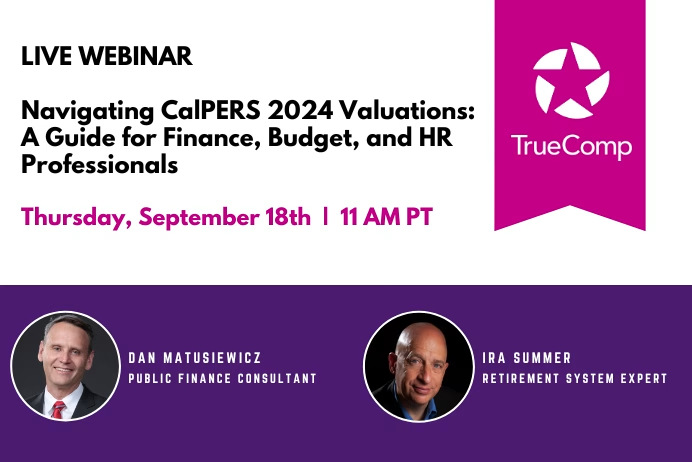
Navigating CalPERS 2024 Valuation Reports Watch The Recording Here On September 18, 2025, TrueComp hosted a webinar to help public agencies understand the 2024 CalPERS valuation reports, the assumptions driving contributions, and strategies for budgeting and risk management. The session featured insights from Ira Summer and Dan Matusiewicz, focusing on practical guidance for agencies navigating the valuation data. Understanding Amortization and Unfunded Liability (UAL) Payments UAL payments grow at a fixed 2.8% rate, regardless of agency salary increases. This ensures predictable short-term budgeting while maintaining long-term funding stability. Agencies do not take on liabilities from new hires’ past service; each agency only funds the portion accrued under its employment. Life expectancy assumptions are slightly increasing for women, leading to marginally higher liabilities. Safety plans may experience bigger increases due to earlier retirement ages. Key takeaway: UAL payments are designed to be stable and conservative, providing a reliable foundation for budgeting. Discount Rate, Inflation, and Salary Assumptions The amortization schedule and payment projections are not directly impacted by salary increases, meaning agencies can budget with some conservatism. The valuation provides a guide for planning future contributions, allowing agencies to estimate costs and potential savings without immediate changes to UAL payments. Employee Contributions For PEPRA miscellaneous plans, little change is expected in employee contributions. Safety plan contributions may increase starting in 2027 due to updated assumptions. New hires do not affect the agency’s UAL and start accruing contributions for their own service only. Strategic Management of Surplus and Risk Agencies are encouraged to maintain reserves outside CalPERS to cover unexpected losses or revenue shortfalls. Once a cushion is in place, surplus funds can be applied strategically to: Reduce interest costs on amortization schedules Pay off longer liabilities efficiently Protect against market volatility Key takeaway: Prioritize liquidity and stability first; then apply additional funds to CalPERS contributions for long-term savings. Budgeting Insights Using the 2024 report’s amortization payments provides a conservative starting point for budgeting. Actual contributions may be slightly lower due to the 11.6% investment gain realized in the year, though assumption changes may offset some of that benefit. Agencies can revisit these numbers when final rates are released in November 2025. Lightning Round Highlights Hiring older vs. younger employees: Minimal impact on normal costs unless a large group shifts the average entry age. No effect on UAL. Hiring employees with prior service at another agency: Agencies do not inherit past liabilities. Assets and liabilities remain with the original employer. Targeting individual loss bases in consolidated risk-sharing pool plans: Agencies can choose which amortization schedules to pay off but cannot separate contributions by prior benefit structure. Key Takeaways UAL payments remain stable and predictable, supporting conservative budgeting. Employee contributions may increase modestly for safety plans but are largely unchanged for miscellaneous plans. New hires do not inherit past UAL, maintaining agency-specific liability integrity. Maintaining a reserve outside of CalPERS is critical to manage market volatility. Strategic surplus application allows agencies to reduce long-term costs once a buffer is in place. Agencies seeking further guidance can contact their TrueComp customer success representative at success@truecomp.com for individualized support and education sessions. Recent Posts Balancing Speed and Precision in Public Sector Pay Decisions Two Tools, One Clear Picture Webinar Recap How Public Sector Pay Drives Better Resident Services Building In-House Compensation Strategy Muscle Load More Tags Resource Library Articles Customer Toolkit Case Studies Events & Webinars Videos Newsroom Subscribe today! We want to hear your story! Is your agency making waves in public service with fresh, innovative solutions—especially when it comes to tackling tough compensation challenges? Share your journey with us for a chance to be featured in our upcoming agency spotlight series. Let’s shine a light on your achievements and inspire others together! Click here
Balancing Speed and Precision in Public Sector Pay Decisions

Smarter Agency Compensation Insights Deliver Speed Without Sacrificing Accuracy In government, ‘speed’ and ‘accuracy’ are non-negotiable for effective public service – in fact, they are essential. Public agencies operate under strict service-level agreements (SLAs) and high expectations from residents, unions, internal departments, and vendors. Whether it’s processing grant approvals, issuing building inspections, or finalizing hiring approvals, agencies are expected to deliver fast, accurate, timely, and reliable results. Compensation planning is no different. Every delay in pay decisions, budget preparations, or labor negotiations means the agency risks losing credibility with employees, residents, and governing boards. Yet, many agencies still try to meet these demands with spreadsheets, static reports, or outdated workflows that struggle to keep up and significantly impact service delivery turnaround time. The Importance of Turnaround Time in the Public Sector No one likes delays, but for government leaders, slow turnaround times can also have direct consequences—both tangible and intangible—such as: Eroding Public Trust: Slow responses and delayed approvals that take months instead of weeks lead to an erosion of confidence residents have in government services and leadership Employee Morale: Delays in hiring approvals or equitable pay adjustments frustrate staff, can increase staff workloads, and lead to disengagement or attrition Negotiation Leverage: Labor contracts are highly time-sensitive. Missed deadlines or rushed decisions can weaken management’s position at the table Budget Accuracy: Inaccurate or outdated data impact an entire fiscal year, leading to costly corrections later on While SLAs are essential for ensuring transparency, accountability, and trust, public agencies are required to meet service standards they didn’t necessarily set themselves. The expectation from employees and the public, however, is clear: they want timely, accurate action. The Bottlenecks Slowing Agencies Down When speed is a priority, mistakes can ensue. Even the most committed HR and Finance teams run into the same obstacles when trying to move faster, such as: Siloed Data: Compensation information that lives in spreadsheets across multiple departments can make it hard to pull together quickly Manual Analysis: Complex pay scenarios often require hours of calculations and cross-checking, which leaves room for errors Reactive Processes: Without modern, predictive tools, it is challenging for agencies to respond to union proposals, budget surprises, or turnover crises in a timely manner Limited Staff Capacity: With small teams and heavy workloads, any extra day spent on manual compensation planning can delay other critical service These bottlenecks not only slow down response time but also put accuracy at risk. Leveraging outdated data or rushing decisions can also mean agencies sacrifice trust. Fortunately, tools can help. TrueComp: Delivering Speed + Accuracy When speed is the goal and accuracy is a must, real-time data insights are critical. That’s where TrueComp comes in and can help agencies deliver speed without sacrificing accuracy. TrueComp was built to break these bottlenecks. By combining benchmarking, labor costing, and workforce analytics in a single platform, TrueComp equips HR and Finance leaders with real-time workforce analytics, benchmarking data, and scenario modeling that cut turnaround times from weeks to hours. For agencies, TrueComp can help them: Model pay adjustments in real time—instantly see cost implications before decisions are finalized Prepare budgets faster—transparent, accurate projections are grounded in live data Accelerate negotiation cycles—pre-built scenarios and cost analyses can anticipate union demands Turn days of analysis into hours—HR and Finance can deliver insights on the same timeline other departments expect This isn’t speed at the expense of precision. Rather, TrueComp’s platform ensures data integrity, compliance, and transparency at every step so agencies never sacrifice accuracy in the name of speed. The result: agencies can make faster, smarter, and more transparent compensation decisions without the risk of errors or public backlash. Government Parallels: SLAs and Service Delivery To understand why turnaround time matters in compensation planning, it can be helpful to look at how agencies already measure it in other areas, such as frontline services: Grant Approvals: Federal and state programs often set strict timelines for distributing funds. Missing deadlines means delayed community impact Inspections: Housing, safety, and environmental inspections are tied to economic development. Slow response stalls projects and frustrates residents Hiring Approvals: Workforce shortages compound when approvals drag. Every week of delay is another week of understaffed classrooms, 911 dispatch centers, or public works crews Compensation planning, much like frontline services, deserves the same urgency. Pay adjustments, budget scenarios, and contract negotiations aren’t abstract; they directly affect an agency’s ability to deliver on their mission. Case in Point: How Faster Decisions Drive Better Workforce Outcomes Budget Preparation The traditional process of compensation planning in many agencies today involves Finance directors and HR staff spending weeks consolidating spreadsheets, cross-checking formulas, and revising based on last-minute union proposals. With TrueComp, the entire process is streamlined and budget scenarios can be built in minutes. Finance can model multiple “what ifs” for different pay scales, staffing levels, or step increases, and immediately see how each option affects the budget. What once took weeks of back-and-forth is delivered in a single meeting. Negotiation Cycles Labor negotiations can be high-pressure and extremely time-sensitive. With real-time insights, management teams can now walk into negotiations prepared with cost-modeling data at their fingertips. If unions propose a 3% raise, the team can instantly show the fiscal impact, compare it against other options, and propose alternatives. With timely insights, negotiation cycles move faster and with greater transparency. Pay Adjustments Even pay adjustments can be bottlenecks without the benefit of up-to-date information. Updating salary schedules—which can take hours when done manually and introduce unwanted risk—can now be simplified. With TrueComp, adjustments are applied instantly across schedules, with updated costs reflected in real time. HR can provide leadership with accurate figures on the same day a request is made. Speed as a Trust-Building Tool Public trust is fragile and shaped by the everyday experiences and interactions people have with their government. When agencies move too slowly, they can seen as bureaucratic and ineffective; when agencies move too quickly and make mistakes, they’re seen as careless. TrueComp strikes the right balance of faster turnaround times paired with
Two Tools, One Clear Picture Webinar Recap

Aligning HR and Finance with Benchmarking + Labor Costing Download Slides Here Download the Recording Here On September 10, 2025, TrueComp hosted an engaging webinar titled Two Tools, One Clear Picture: Aligning HR and Finance with Benchmarking + Labor Costing, exploring how public sector agencies can optimize labor costing and benchmarking processes to make more informed compensation decisions. Led by Derek Lee, Sales Engineer, and Melanie Currid, Training and Enablement Manager, the session highlighted practical strategies and real-world use cases for agencies navigating complex budgeting and staffing challenges. Streamlining Labor Costing Derek and Melanie demonstrated how the Labor Costing module allows agencies to: Quickly compare multiple budget scenarios without juggling multiple spreadsheets Customize cost categories and variables to fit each agency’s unique needs, from salaries to allowances Track and visualize the impact of changes, such as a COLA increase or benefit adjustment, across all relevant positions Duplicate projects year-over-year, saving significant time during budget updates while ensuring accuracy This module reduces spreadsheet errors and gives agencies greater confidence in forecasting labor costs and planning for negotiations, whether in bargaining or non-bargaining states. Benchmarking for Strategic Decision-Making The Benchmarking module enables agencies to compare themselves against peer agencies, analyzing: Base salary and total compensation, including benefits, retirement, and time-off packages Compensation trends across multiple comparator agencies, helping agencies identify areas where they may be underpaying or overpaying Job descriptions and classifications, ensuring accurate comparisons even when job titles differ between agencies Attendees learned how benchmarking can identify problem areas proactively, helping agencies develop competitive compensation strategies to attract and retain top talent. Integrating Labor Costing and Benchmarking A key insight from the webinar was the synergy between the two modules: Identify gaps: Benchmarking highlights where salaries or benefits may lag behind peers Model solutions: Labor costing simulates the financial impact of adjustments to salaries or benefits Plan effectively: Agencies can present accurate, scenario-based budgets to stakeholders with confidence Real-world examples demonstrated how an agency could address underpayment in a specific classification and calculate the multi-year cost impact, streamlining decision-making and resource allocation. Key Takeaways Both modules are highly customizable and tailored to each agency’s needs Proactive benchmarking and detailed labor costing reduce reactive decision-making and improve employee retention Agencies gain a holistic view of compensation, balancing competitive salaries with benefits and other costs To learn more about how TrueComp can help your agency optimize compensation strategies, contact us today for a personalized demo. Recent Posts Two Tools, One Clear Picture Webinar Recap How Public Sector Pay Drives Better Resident Services Building In-House Compensation Strategy Muscle Reimagining Public Service Load More Tags Resource Library Articles Customer Toolkit Case Studies Events & Webinars Videos Newsroom Subscribe today! We want to hear your story! Is your agency making waves in public service with fresh, innovative solutions—especially when it comes to tackling tough compensation challenges? Share your journey with us for a chance to be featured in our upcoming agency spotlight series. Let’s shine a light on your achievements and inspire others together! Click here